Vedic Panchang
Panchang Details
Tithi, Nakshatra, Yoga, Karana, Vara, Paksha, Sun & Moon times, Hindu Panchang, Rashi positions
Muhurta
Shubh Muhurta, Rahu Kalam, Yamaganda, Gulika Kalam, Choghadiya, Gowri Panchangam
Graha Sthiti
Planetary positions, Rashi, Degree, Longitude, Retrograde status, Udaya Lagna
Transits
Live planetary transit predictions, upcoming Gochar dates, transit effects
What is Panchang?
Panchang, meaning "five limbs" in Sanskrit, is the ancient Vedic calendar system that forms the foundation of Hindu astrology and timekeeping. It comprises five essential elements: Tithi (lunar day), Nakshatra (constellation), Yoga (auspicious combination), Karana (half-day), and Vara (weekday).
Together, these five components provide a complete astrological profile for any given day, helping individuals determine auspicious timings (Muhurta) for important life events such as marriage, business ventures, travel, ceremonies, and spiritual practices.
The Five Elements of Panchang
Tithi (Lunar Day)
Tithi represents the angular relationship between the Sun and the Moon. There are 30 Tithis in a lunar month, divided into Shukla Paksha (waxing) and Krishna Paksha (waning) phases. Each Tithi has specific qualities and is considered favorable or unfavorable for different activities.
Nakshatra (Lunar Mansion)
Nakshatras are 27 celestial divisions of the ecliptic, each spanning 13°20′. The Moon transits through one Nakshatra approximately every day. Each Nakshatra has its own deity, ruling planet, and unique characteristics that influence personality traits and event outcomes.
Yoga (Auspicious Combination)
Yoga is calculated from the combined longitudinal movement of the Sun and the Moon. There are 27 Yogas, each with specific attributes. Yogas indicate the overall quality and potential success of activities undertaken during that period.
Karana (Half-Day)
Karana represents half of a Tithi, making 11 Karanas in total (7 movable and 4 fixed). Karanas help determine the finer nuances of timing for daily activities and are particularly important for Muhurta selection.
Vara (Weekday)
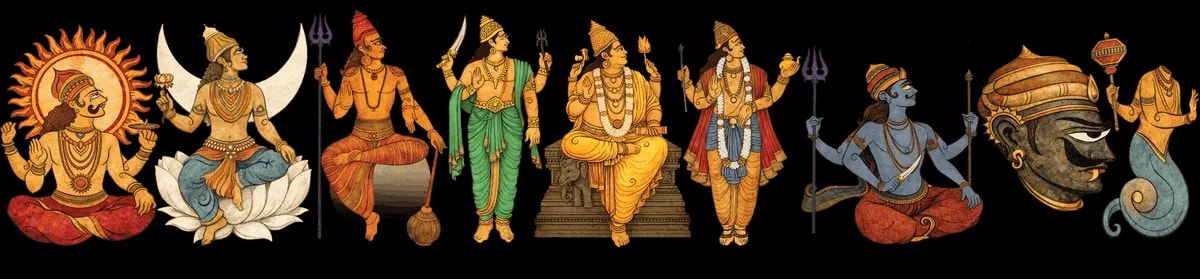
Vara refers to the day of the week, each ruled by a specific planet. Sunday (Sun), Monday (Moon), Tuesday (Mars), Wednesday (Mercury), Thursday (Jupiter), Friday (Venus), and Saturday (Saturn). Each Vara carries the energy of its ruling planet.
Muhurta (Auspicious Timing)
Muhurta is the art of selecting the most favorable moment for specific activities. Based on the Panchang elements, Muhurta considers factors like Rahu Kalam (inauspicious), Abhijit Muhurta (universally auspicious), Choghadiya (daily hour classifications), and Gowri Panchangam.
Planetary Transits (Gochar)
Planetary transits, known as Gochar in Vedic astrology, refer to the continuous movement of planets through the zodiac. Unlike the birth chart which is fixed, transits show how current planetary positions interact with your natal chart, creating periods of opportunity, challenge, and transformation.
Major transits — such as Saturn's Sade Sati (7.5-year transit over the Moon), Jupiter's annual transit through signs, and Rahu-Ketu's 18-month nodal transits — are considered highly significant in Vedic astrology for timing major life events.